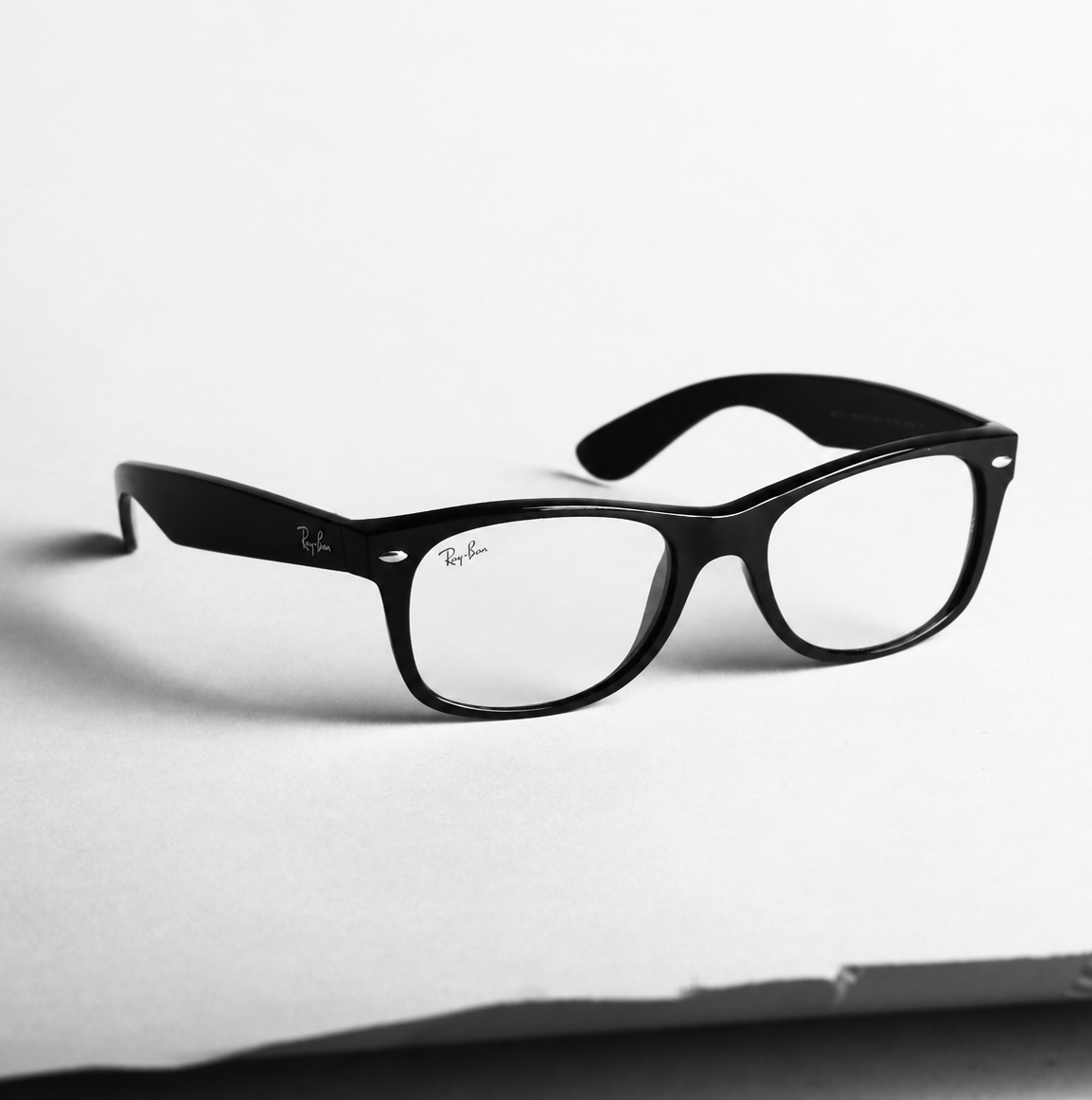
What are the Meta (Ray-Ban) smart glasses?
Ray-Ban Meta smart glasses are a wearable artificial intelligence (AI) device. They are effectively a smartphone but look just like regular glasses. Those wearing the glasses can capture photos and videos, listen to audio, take phone calls and interact with an AI assistant.
Why are they controversial?
The use of Meta glasses is controversial, with several incidents occurring in Australia and around the world.
Public filming without consent is one such matter. Over the last few years, New South Wales Police have received various reports of women being recorded without their consent by influencers and ‘lifestyle coaches’ in Sydney’s King’s Cross and on campus at the University of Sydney. In 2025, an American-based social media influencer was investigated by NSW Police after approaching and filming women using the glasses on Bondi Beach without their knowledge, then posting the videos to social media. A Monash University study revealed 17% of owners admitted to using the glasses to record other people without their consent or record in prohibited places.
The risk of doxxing is also problematic. In 2024, two Harvard students demonstrated how pairing the glasses with facial recognition software could instantly dox strangers.
Several Australian schools have banned smart glasses in the classroom over concerns that the devices can livestream lessons, capture footage for AI deepfakes and turn safe learning spaces into viral videos, all while the glasses look like regular eyewear.
Possible offences
There is no overarching statutory right to privacy at the federal level. A patchwork of statutes at the state level and common law cases protect privacy.
Audio vs Video
There is an important distinction between audio and video in this context. Audio recording laws have much stronger restrictions.
In NSW, the Surveillance Devices Act 2007 governs the use of listening (audio) and optical (video) devices. Section 7 of the Act provides that, subject to limited exceptions, it is an offence to record a private conversation without the consent of all parties. A similar provision applies in the ACT.
Conversely, section 8 of the Act does not broadly criminalise filming people. Instead, it targets installing or using an optical recording device with non-consensual entry, or interference with premises or objects. Essentially, the basic act of openly filming in public is not prohibited by this section.
Meta glasses capture video by default, but they can also capture audio. This would trigger the strict listening devices offence in section 7. While the glasses have a small LED indicator that flashes upon recording, this can be covered with an LED light blocking sticker (widely available for purchase online), which increases the risk of ‘secret recording’.
Private places and intimate images
The law in Australia distinguishes between filming in a public space and filming a person in a private setting or intimate circumstances. Unlike general public recording, filming someone in a bathroom, change room, bedroom or other private area without consent is a criminal offence.
In NSW, these offences fall under the Crimes Act 1900, which contains specific provisions dealing with ‘private acts’ and intimate images. Section 91K(1) makes it illegal to film a person engaged in a private act without their consent. Filming another person’s private parts is also prohibited under s 91L(1).
In New Zealand, an Auckland man who recorded using his Google glasses while a sex worker was naked in front of him was charged with attempting to make an intimate visual recording without consent. In the United Kingdom, a man pleaded guilty to voyeurism in a Magistrates’ Court after he recorded sex with a woman without her consent using the Meta glasses.
While these offences focus on what is filmed and where it occurs, criminal liability may also arise from how a person uses the glasses.
Stalking, harassment and persistent monitoring
If the glasses are used in a manner that is persistent, targeted or intimidating, the user may breach stalking and harassment laws.
In NSW, stalking is an offence under section 13(1) of the Crimes (Domestic and Personal Violence) Act 2007. The definition of stalking is extended to ‘the monitoring or tracking of a person’s activities, communications or movements – whether by using technology or in another similar way’ under section 8(1)(b1)(i).
Following someone while recording, repeatedly approaching them, and continually posting targeted content may constitute an offence under this Act. A relevant example arises in Ireland, where a woman’s ‘threatening’ ex-partner used Meta glasses to record their young daughter crying while she was in his care and sent her the footage. He also filmed the woman when arriving to pick up and drop off their daughter at the woman’s residence. Consequently, she was granted a temporary protection order.
Non-consensual sharing, doxxing and online misuse
Legal issues also arise when recordings made with the glasses are shared online, as the act of posting the material can trigger separate criminal offences. Even if public filming is not strictly illegal, the act of posting or sharing such footage electronically or may be.
Using the glasses to record someone in public and publishing that footage online, combined with facial recognition software or releasing other information about the person, may incur up to seven years’ imprisonment. Under Section 474.17 of the Criminal Code Act 1995 (Cth), it is an offence to use a carriage service in a way (whether by the method of use or the content of a communication) that a reasonable person in the circumstances would regard as being menacing, harassing or offensive.
Defences and exceptions
In limited situations, there are some exceptions that may allow someone to lawfully record a conversation or interaction using Meta glasses. The Surveillance Devices Act in NSW permits secret recording where it is undertaken to protect the recorder’s lawful interests. ‘Lawful interests’ refers to self-protection or the protection of another person’s rights. Courts examine whether a reasonable person in the same circumstances would consider the recording ‘reasonably necessary’ and a proportionate response.
Examples of the exception usually involve serious circumstances. In DW v R [2014] NSWCCA 28, the court found a 14-year-old girl secretly recording a conversation with her father, who was later charged with indecent assault, was acting to protect her lawful interests. Likewise, in Latham v Latham [2008] FamCA 877, a father’s secret recordings of his wife and children, revealing the wife’s abusive comments, was acceptable as they were reasonably necessary to protect his children’s safety.
The lawful interests exception is very unlikely to protect general smart glasses recordings in public. Everyday recording, particularly of strangers or in public settings, will not satisfy the threshold of protecting lawful interests.
Is the law keeping up?
Australia’s current legislative framework has not kept up with the capabilities of wearable AI devices. There is little regulation that reflects the reality of discreet, hands-free recording now possible in everyday environments.
Community attitudes indicate the law is out of step with public expectations. A 2025 survey of 2500 Australians found 33% wanted smart glasses completely banned, with many revealing they felt ‘threatened’ and ‘creeped out’ by the capabilities of the Meta glasses. Moreover, schools and workplaces have implemented policy prohibitions for safety and privacy purposes.
Future legislative reform may include expanding provisions on intimate images, closing loopholes around public filming, and introducing explicit consent requirements for recording individuals in certain contexts.
Should you or someone you know be charged with an offence, it is essential you receive legal advice from an experienced criminal defence lawyer at any early stage. To discuss your options, call Hugo Law Group in Sydney (02 9696 1361), Canberra (02 5104 9640) and Perth (08 6255 6909) to make an appointment to speak to one of our lawyers.